The London producer also dives into the value of music video culture & more in new interview
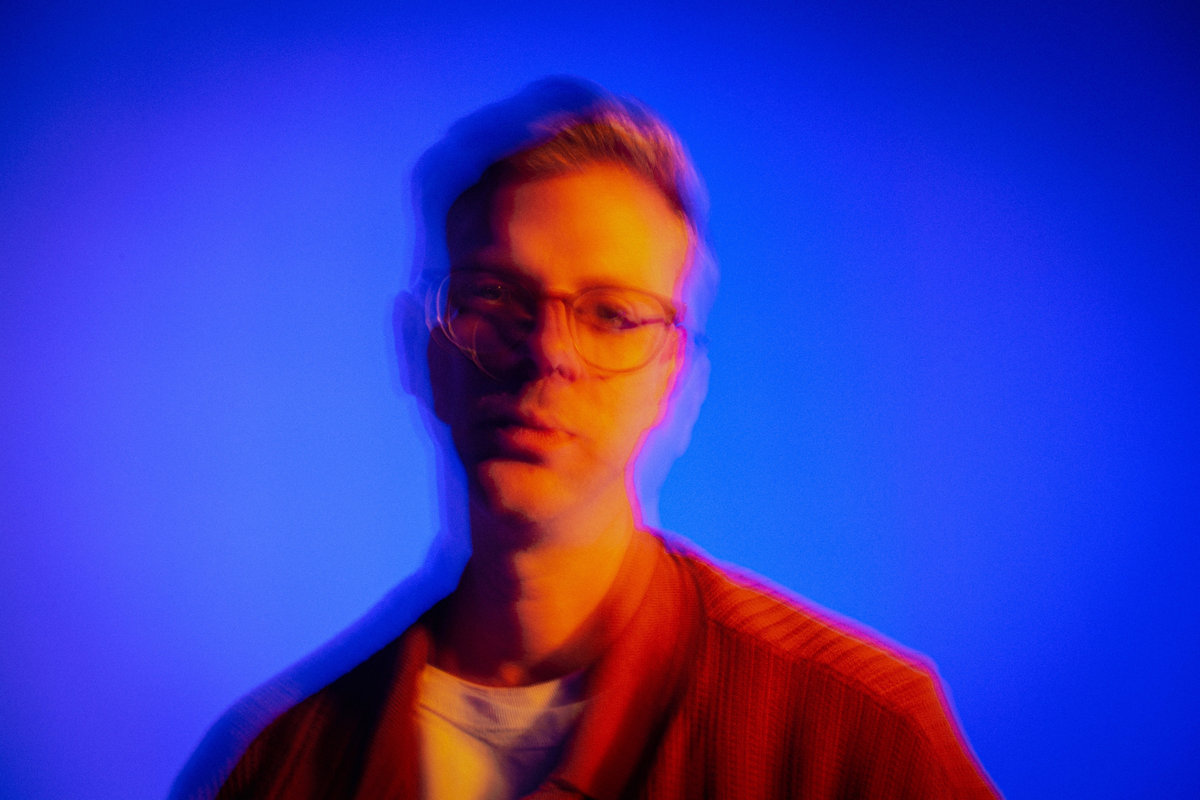
In an era where music disappears into algorithmic noise, Sound of Fractures stands out by pushing listeners toward something more intentional. The London producer blends UK dance traditions with deeply personal textures — found sounds, family recordings, and imperfections that make his electronic music feel lived-in rather than polished. That philosophy drives Scenes, his ambitious new project that turns an album into a collaborative memory archive. Fans submitted photos and stories, blurring the lines between creator and audience, art and lived experience. We spoke with him about embracing imperfection, building emotional worlds, and rethinking how music can hold meaning.
Your musical ethos is described as “finding beauty in imperfection” and drawing from UK dance music, hip-hop, and soul. Could you elaborate on how your background and experiences led you to this distinctive synthesis of sounds and themes?
Both my parents worked in music, so there was only ever one path for me, no matter how many times they told me never to work in the industry. I grew up surrounded by walls of records, soundtracked by their love of reggae and northern soul. And I came of age at what feels, looking back, like a unique moment: trip-hop was happening, UK garage and drum and bass were exploding, and US hip-hop was still largely sample-based. Everything was about chopping things up, taking sounds that shouldn’t fit together and making them into something new. That stayed with me.
You blend diverse influences like Jamie XX and Burial with deeply personal elements, such as incorporating “found sounds” like your daughter’s heartbeat. How do these personal and contrasting textures come together to create the deeply emotional electronic music Sound of Fractures is known for?
I’ve always been drawn to music that feels like it has a story buried inside it, something you can’t quite articulate but you feel… I think rawness and imperfections are a big part of that. For me, the found sounds are a way to anchor the music in real life rather than letting it float off into abstraction. My daughter’s heartbeat is a way of saying this is music made by someone with a life outside the studio, and that life bleeds into the work.
The contrasts come naturally because that’s how I experience the world. I’m listening to old soul records one minute and messing around with synths the next. I’m doing drop offs in the morning and finishing a mix at midnight. The music holds all of that. I don’t try to smooth it out, I think the friction is where the emotion lives.
Your new album Scenes fundamentally rethinks the traditional album format by inviting fans to submit their own photos and memories. What was the catalyst for moving away from passive consumption and sparking this active, collaborative dialogue with your listeners?
I’d been thinking for a while about the gap between how much music means to people and how little that meaning gets expressed in the current ecosystem. Streaming is passive by design, you play something, it disappears, and the platform moves you on. But music is about the memories and emotions it bonds itself too.. It lives with you throughout your life bonded to those memories. I wanted to give that connection a tangible form, and try to elicit that emotional connection between the listener and the music, by creating a moment of value for them.
We can’t pop up and play our songs at a wedding or your first kiss. So I was curious about how we make those stronger connections, how we encourage that unique thing that music does when it sound tracks our experiences. The initial idea was pretty simple; play the song, ask the listener a question that invites them to think about their past..and then give them something back to remember that moment by. Whether or not they formed a connection with that song, or just with me for providing that moment .. I really had no idea at the time. I just wanted to play with that idea.. And in doing so make at least push people to think about the value music brings to their life.
The concept of “world-building” is at the core of your vision, particularly through exploring the fusion of web2 and web3. How is this approach fostering stronger emotional bonds with your audience and challenging reliance on traditional major tech gatekeepers?
World-building for me is about creating something people want to be part of, not just consume. In an era where music has become commodified and artist identities are diluted, I’m trying to offer an alternative. The platforms want you to be a content machine, post constantly, chase the algorithm, build for their metrics. But that can strip away everything that makes an artist interesting.
Web3 gave me tools to experiment with ownership, contribution, and value in ways that didn’t exist on traditional platforms. With SCENES, contributors could own a piece of the work. The music video was funded by a community of patrons because there’s no commercial model that would have supported it. These aren’t just technical choices, they’re about finding tools that can help build direct relationships with people who care, rather than optimising for people who are just passing through. The technology is just a tool, and one that allows me to play in the grey space away from the platform rules and norms while owning the connections that are made in the process.
The press release highlights a key question: in a digital landscape often dominated by a 60-second attention span, what is the role and value of a traditional music video? How did this central dilemma inform the concept for the Scenes visual?
That question was in my mind throughout the process. I knew I wanted to make something cinematic. But I also knew that in the current climate, a three-minute music video feels almost anachronistic. Most people will never watch it.
What made me push ahead was realising that the value isn’t only in the views. The video becomes an artefact, proof that this kind of work can still exist if you find ways to fund it outside the commercial models. It also forced me to confront my own assumptions about what promotion means. Maybe a beautiful piece of art that a thousand people watch intently is worth more than a clip that a million people scroll past.
You and director Helena Ausgang spoke about sharing a love for the cinematic music videos of the 90s and 2000s, by directors such as Michel Gondry and Spike Jonze. Can you describe the creative journey and decision-making process that led you to pursue a cinematic video for Scenes despite the challenges in the current consumption climate?
Helena reached out on Instagram and we started talking, just as fans initially—about music, about those videos we grew up on, about what’s been lost. I loved those meeting of two mind moments where a great creative director got creative freedom to create a piece of art inspired by the music. My initial reaction was: I would love to do this, but how can I justify the spend when music videos have lost so much of their appeal?
But we kept talking, and the more we talked the more I wanted to make it happen. Helena sent a treatment, I shared it with C.Y. Lee, who’s been a patron of my work for a few years. When I explained honestly that videos like this just don’t happen anymore, that there’s no model to fund great art around music just for the art’s sake, that honesty ended up being the exact reason he offered to come on board as executive producer. That it couldn’t exist any other way became the best reason to make it happen.
Looking ahead to 2025/2026, where do you see the place of the traditional, long-form music video within the broader marketing strategy for artists? Do you believe the conceptual approach you’ve taken with Scenes is a necessary blueprint for its future relevance?
I don’t think there’s one blueprint. What I do think is that the music video as pure marketing is probably dead for most artists. The economics don’t work anymore. But the music video as art, as a statement, as proof of ambition, has a future if artists can find alternative funding models, or be really creative with their resources and phones.
For me, the approach with SCENES wasn’t about creating a template. It was about demonstrating that this work is still possible when you have people who believe in the experiment rather than demanding guaranteed outcomes. Whether that’s patronage, grants, brand partnerships that actually respect the artist’s vision, the model matters less than the principle: fund/make the work that couldn’t exist any other way. I think that’s what art is meant to do.
Scenes is described as a collaborative and evolving project. For fans who want to be part of this world-building, what is the best way for them to submit their cherished memories and engage with the album’s interactive platform?
Head to scenes.soundoffractures.com and scroll through the galleries.. The project isnt active anymore but those memories that were made while the project was in motion will make you in turn think of moments in your life. And in that sense it will always be active, which is why we created the postcard book too, someone who took part wanted to pass on their scene to others. It lives on through the impact it has on new people. Projects like SCENES need an end point because that is partly why they feel so special to those who were there at the time.
If you want to take part in the next collaborative project then subscribe to my substack as in January my new EP and project called Alone Together start. It’s a continuation of the ethos of SCENES, but this time it will allow people to share their memories as audio and create their own Sound of Fractures song with their life embedded in it. The idea is that we can listen to each others memories and hear how our shared experiences connect us even though we are all over the world.